
It creeps up on you. You put the unit on in the morning and everything is fine. By early afternoon there is a dull pressure behind your temples, and by evening you are counting the minutes until you can take it off. The relief when you finally do is almost startling.
If that sounds familiar, you have probably assumed it is just the price of wearing a wig. It is not. Comfortable all-day wear is entirely achievable, and the fix is usually mechanical rather than mysterious.
What Is Actually Causing the Ache
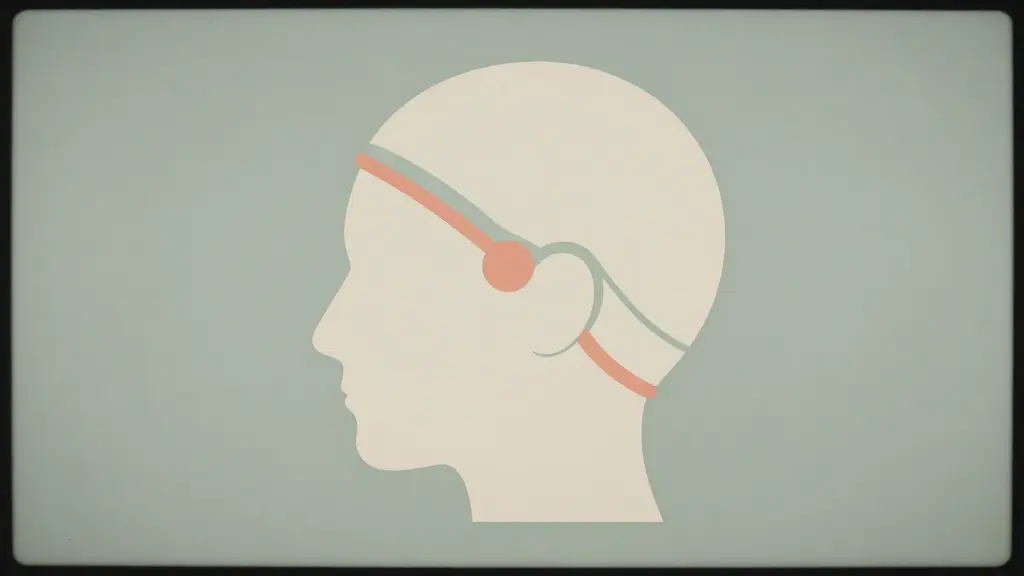
The scalp is not a passive surface. It has muscle underneath it, and nerves running through it — the occipital nerves at the back of your head, and branches over your temples — that are close enough to the surface to be affected by pressure from outside.
Sustained compression on those areas irritates them. It is the same mechanism behind the headache people get from swim goggles, a tight helmet, or a ponytail pulled too high, and it has a name in the medical literature: an external-compression headache. The pain is typically dull, steady, and located exactly where the pressure is. It tends to build over hours rather than arriving suddenly, and it usually eases within an hour or so of removing whatever was causing it.
A wig applies pressure in three places, and any of them can be the culprit:
The elastic band around the perimeter, which is often narrow and firmer than it needs to be.
The adjustable straps at the nape, which concentrate pull on two small points at the back of your head.
The combs and clips, which press into the scalp in a handful of spots and are frequently the real source when the ache is localized rather than general.
There is also a fourth factor that people rarely connect: bulk underneath. Thick hair pinned into a mound raises the wig and forces the band to stretch harder around a larger volume, which multiplies the pressure everywhere. If that describes you, our flat prep guide is worth reading alongside this one.
Measuring Your Head Properly
Before you modify anything, find out whether you are simply wearing the wrong size. A surprising number of people are, because most wigs are sold as “average” and average covers a narrower range than you would expect.
You need three measurements, taken with a soft tape measure over flat hair:
Circumference. Around your head, following your hairline at the front, just above your ears at the sides, and around the bump at the back of your skull — the occipital bone. This is the number that matters most.
Front to nape. From your natural hairline at the centre of your forehead, straight back over the crown, to the base of your hairline at the nape.
Ear to ear. Across the top of your head from the top of one ear to the other.
Typical adult circumference falls somewhere in the range of roughly 53 to 58 centimetres, with “average” caps generally built around the middle of that. If you measure above it, an average cap will be under tension from the moment you put it on, and no adjustment will fix that.
The signs that size is your problem are consistent: the straps are already at their loosest setting, the ear tabs sit too high, the unit rides up through the day, and you get pressure across the forehead specifically. That combination means the cap is too small, full stop.
Replacing a Tight Elastic Band
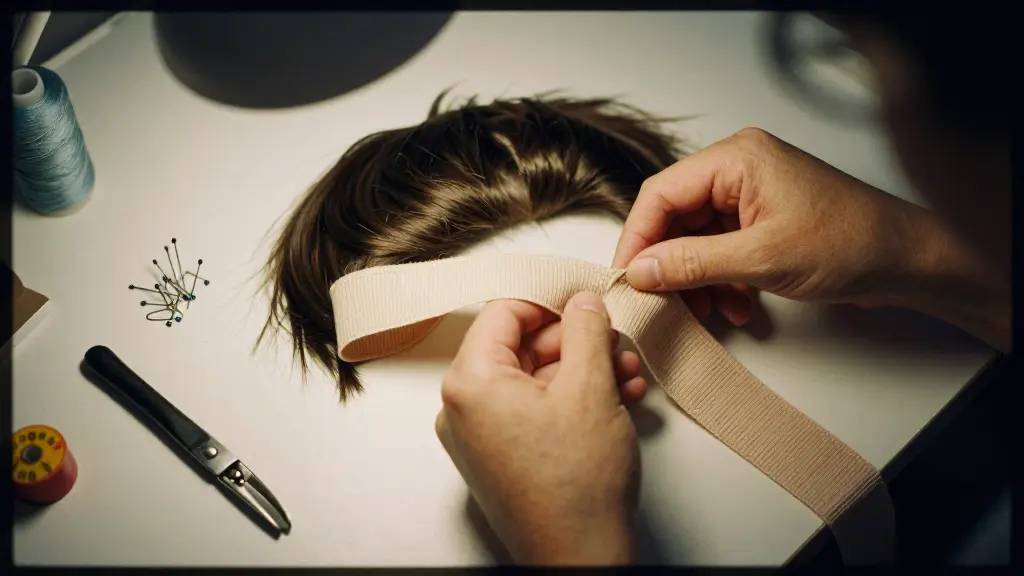
If your size is fine but the band itself is unforgiving, swapping it is a straightforward sewing job that takes about twenty minutes.
What you need: a seam ripper or small sharp scissors, soft knit elastic roughly two to two and a half centimetres wide, a needle, matching thread, and pins.
Remove the old band. Turn the wig inside out and find where the existing elastic is stitched into the cap, usually at the nape between the two adjustable straps. Use the seam ripper to carefully open those stitches. Go slowly — the cap material around it is not sturdy, and cutting it creates a bigger problem than the one you are solving.
Measure your replacement while wearing the wig. This is the important part. Put the unit on, hold the new elastic across the gap where the old one was, and pull it to a tension that feels secure but leaves no sensation of pressure. Mark that length, then add a centimetre at each end for the seam allowance.
Sew it in. Pin the elastic in place, then attach each end with a backstitch, going over the same area several times for strength. Hand sewing is perfectly adequate here and gives you better control than a machine on this kind of stretchy, delicate material.
Test before you trim. Wear it for an hour before cutting off any excess.
The reason wider elastic works better is simple physics: the same amount of holding force spread over a wider strip means less pressure at any given point. Narrow bands concentrate everything into a thin line, which is exactly what irritates the nerves underneath.
Adjusting Straps, Combs and Clips Without Losing Grip
Small changes here often solve the problem without any sewing at all.
Loosen the straps, then test. Most people tighten by reflex rather than by need. Set the straps so you can comfortably slide two fingers under the cap edge at the nape, then walk around, bend over, and shake your head. If it stays put, it is tight enough. Many wearers discover they have been at least two notches over-tightened for months.
Remove combs you do not need. Combs are sewn in with a few stitches and come out easily with a seam ripper. If your ache is localized to a specific spot — one point at the crown, or just above one ear — a comb is very likely responsible. Removing one or two and relying on the straps and a grip band instead is a common and effective fix.
Reposition rather than remove. If you want the security, move the comb a centimetre or two so it is not pressing the same point every day.
Add a wide grip band. Counterintuitive, but a wide velvet or silicone-lined band worn under the wig lets you loosen everything else, because friction does the holding instead of tension. Wide is essential; narrow bands make things worse.
Skip double-capping. Two caps means twice the compression. If you need two just to contain your hair, the braiding underneath is what needs adjusting.
Habits That Reduce Pressure Through the Day
Give yourself breaks. Even ten minutes with the unit off, mid-afternoon, resets the pressure and often heads off a headache before it establishes. If you work from home, this costs you nothing.
Massage the pressure points. Firm circular pressure at the temples and along the base of the skull, for a minute or two, does a surprising amount.
Vary your positioning slightly. Wearing the unit in exactly the same spot every single day means the same nerves take the same pressure indefinitely. A few millimetres of variation spreads the load.
Consider the weight. A very long, very dense unit is heavy, and that weight pulls down on the same contact points all day. Reducing density or length is a legitimate comfort decision.
Stay hydrated and watch your posture. Neither causes wig headache directly, but both lower your overall threshold for developing one.
Take it off when the ache starts. Pushing through turns a mild pressure headache into one that lingers for hours after removal. Early removal usually means quick relief.
When the Wig Is Not the Problem
Not every headache during a wearing day is a wig headache, and it is worth being able to tell.
A pressure headache from a wig follows a recognizable pattern: it builds gradually over hours, it sits where the pressure is, and it improves fairly soon after you take the unit off.
Talk to a doctor if the headache continues long after removal, occurs on days you are not wearing anything, is severe or sudden in onset, comes with visual changes, nausea, dizziness, numbness or weakness, or is simply becoming more frequent than it used to be. Persistent headaches deserve a proper look regardless of what you suspect is causing them.
It is also worth ruling out neighbouring culprits — scalp irritation can feel like tenderness that shades into headache, and our guide to soothing an itchy scalp under a unit covers that side of things.
When It Is Time for a Different Wig
Sometimes you have loosened everything, removed the combs, replaced the band, and it still aches. At that point you are trying to make a cap do something it was not built to do.
Look for a unit with a genuinely generous adjustment range, wide soft elastic as standard, and a deeper cap if your measurements run above average. Adjustable comfort fit wigs are designed with this in mind, and if your circumference is on the larger side specifically, roomier cap sizes will do more for you than any modification.
Comfort is not a luxury feature. A wig you dread taking off at the end of the day is a wig you will eventually stop wearing.
Frequently Asked Questions
How tight should a wig actually be?
Snug enough that it stays put when you shake your head, loose enough that you can slide two fingers under the cap at the nape. You should stop noticing it within twenty minutes of putting it on. Any lingering awareness of pressure will become an ache by evening.
Why does my wig give me a headache but a hat does not?
Hats generally rest on the head, while wigs grip it — elastic under tension, straps pulling at the nape, and combs pressing into the scalp all apply active, sustained pressure. A loose hat has none of that, which is why it can sit on your head all day without complaint.
Can a tight wig cause hair loss?
Sustained tension on the same follicles over long periods can contribute to traction-related thinning, particularly around the hairline where combs and bands sit. This is a gradual process rather than a sudden one, and it is a good reason to loosen up and vary positioning. Tenderness, small bumps along the hairline and short broken hairs at the front are the early signs worth acting on.
Should I replace the elastic or just loosen the straps?
Try loosening first, since it costs nothing and solves the problem for a lot of people. Replace the elastic if the band itself is narrow, stiff, or clearly the source of the pressure, or if loosening the straps means the wig no longer stays put.
How long does a wig headache take to go away?
Usually somewhere between thirty minutes and a couple of hours after removal, sometimes faster with a bit of massage. If yours regularly lingers well beyond that, or shows up on non-wearing days, it is worth mentioning to a doctor rather than assuming the wig is responsible.