
If you swim regularly and colour your hair, you have probably already made peace with a certain amount of damage. Your colour fades faster than everyone else’s, your ends feel like straw by the end of the season, and if you are blonde, there is that faint green tinge you would rather not discuss.
None of this is inevitable. It takes about ninety seconds before you get in the water and five minutes after — and it makes a bigger difference than any product you buy afterward.
What Pool Water Actually Does
Chlorine is an oxidizer. That is its job — it breaks down organic matter, which is how it keeps a pool sanitary. Unfortunately your hair is organic matter, and your hair colour is too. Chlorine strips deposited pigment and accelerates the oxidation that makes colour look faded and dull.
It removes the hair’s protective lipids, leaving strands dry, rough and porous. Porous hair then absorbs more pool water next time, which is why the damage compounds over a season.
Colour-treated hair starts at a disadvantage. Colouring already raises the cuticle, so treated hair is more porous going in and soaks up more chlorinated water than virgin hair would.
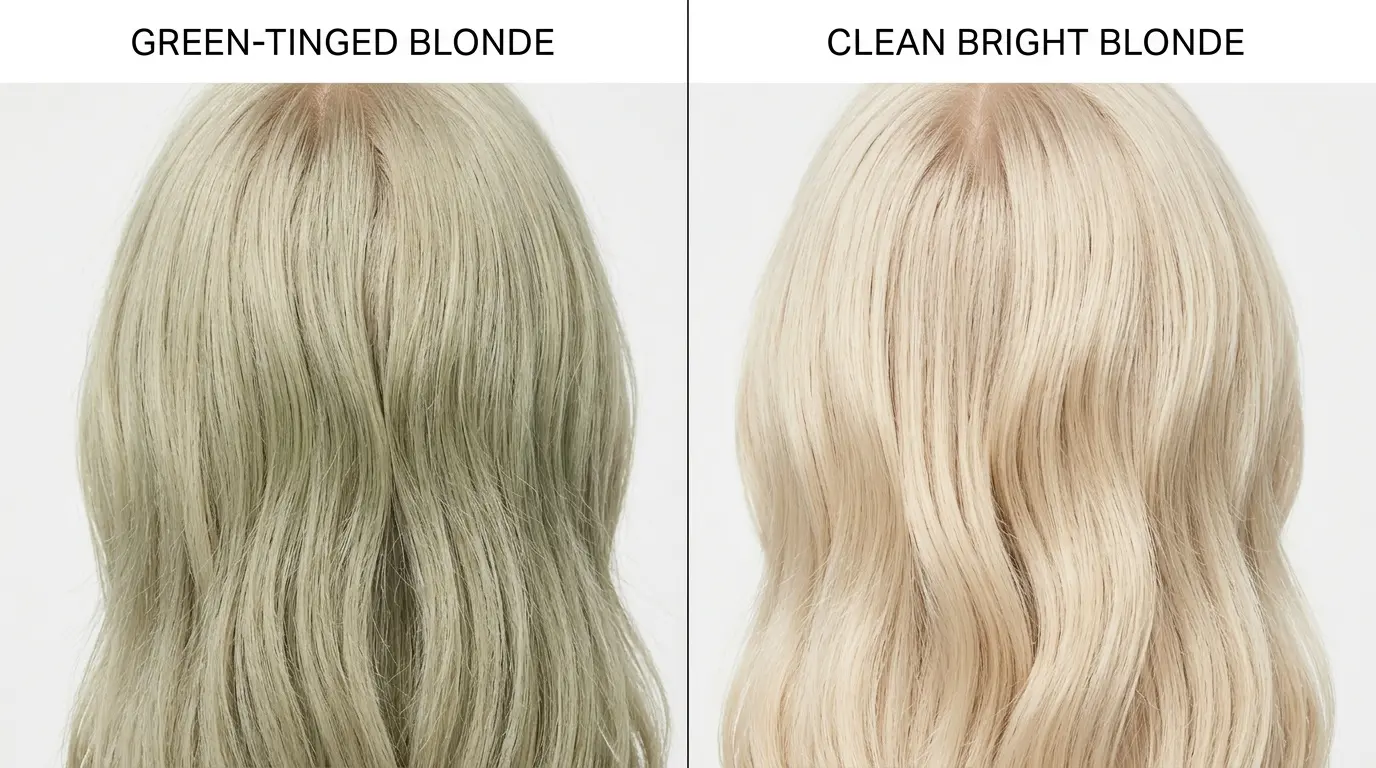
And the green thing is not what people think. Green tinting on blonde hair is not caused by chlorine directly — it comes from copper in the water. Copper enters pools through algaecides and older plumbing, oxidizes in the presence of chlorine, and deposits on porous hair as a green film. That is why it affects bleached blondes most: their hair is the most porous and the colour shows it most clearly.
Salt water is gentler on colour than chlorine but seriously dehydrating, and sun exposure at the beach compounds it.
The Pre-Swim Routine That Matters Most
This is the highest-value part of the whole article, and it takes almost no time.
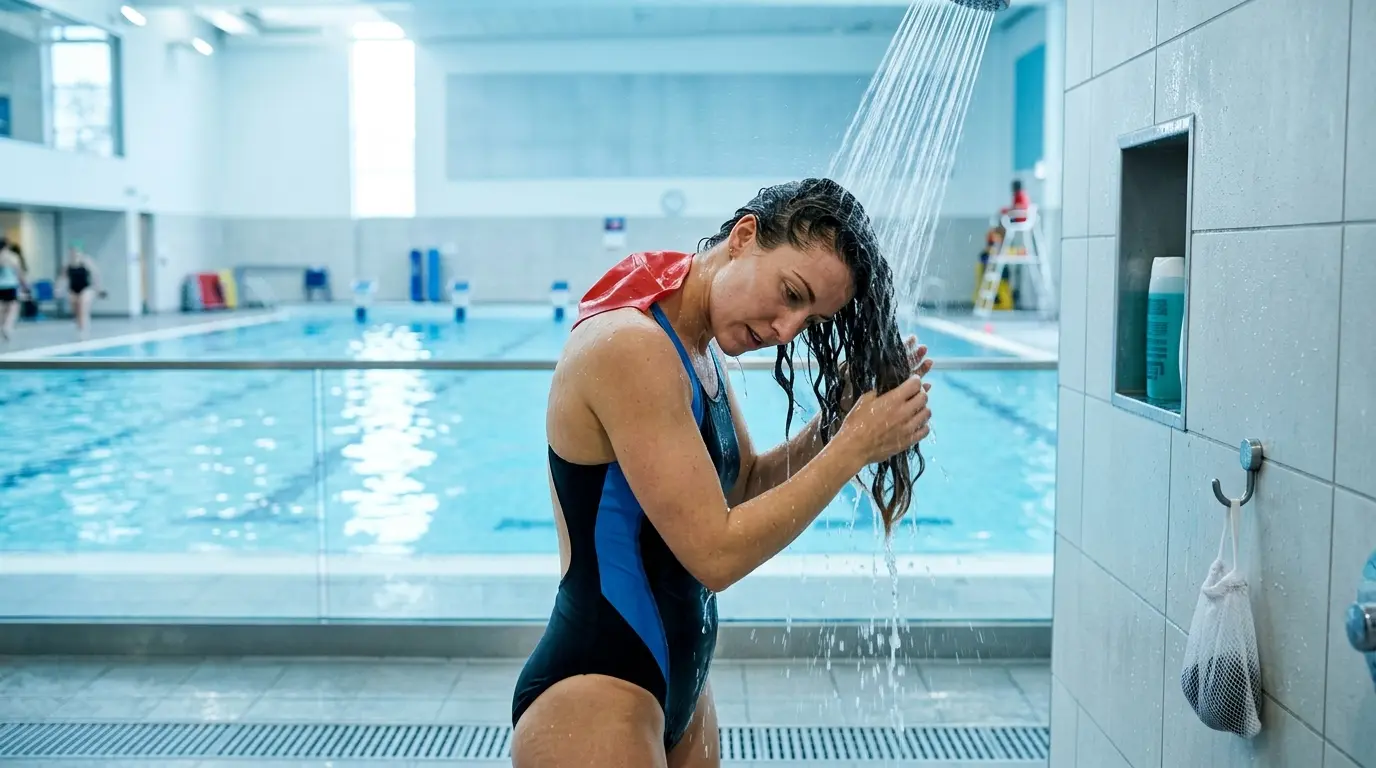
Soak your hair in fresh water first. Hair absorbs water like a sponge, and a sponge that is already full cannot take on much more. Standing under the shower for sixty seconds before you get in the pool means your hair absorbs significantly less chlorinated water. If you do nothing else, do this.
Then add a barrier. Apply a leave-in conditioner, a light oil, or a purpose-made swimmer’s protectant to the wet hair, concentrating on the mid-lengths and ends. This gives the chlorine something to work on before it reaches your hair. Coconut or olive oil work if you have nothing else.
Wear a cap. A silicone cap over pre-wet, conditioned hair is the most effective protection available. No cap is fully watertight, which is exactly why the wetting and conditioning steps still matter — the cap reduces exposure rather than eliminating it. Tuck long hair up and in.
Do not skip these on short swims. Twenty minutes in a pool is still twenty minutes of chlorine contact.
After You Get Out
Rinse immediately. Before the sauna, before the changing room chat, before anything. Chlorine left sitting in your hair keeps working, and the longer it sits the more it takes. A thorough fresh-water rinse at the poolside showers removes a surprising amount.
Use a swimmer’s or chelating shampoo. This is the one specialist product genuinely worth owning. Regular shampoo does not remove chlorine and mineral residue properly. Chelating formulas contain ingredients that bind to copper, chlorine and hard-water minerals so they rinse away rather than accumulating.
Use it after every swim if you swim a few times a week, or two to three times a week if you are in the pool daily — it is stronger than everyday shampoo and colour-treated hair does not need it more often than that. Swimmer’s hair care essentials formulated to be colour-safe give you the chelating action without stripping pigment aggressively.
Deep condition afterward. Every time you use a chelating shampoo, follow it with a proper conditioning treatment. Chlorine removal and moisture restoration are two halves of the same job.
Rinse in lukewarm water, not hot. Hot water opens the cuticle further and lets colour escape.
Your Weekly and Monthly Routine
Deep condition two or three times a week if you swim daily. Regular swimmers need considerably more moisture than everyone else, and the usual once-a-week advice is not enough.
Alternate protein and moisture treatments. Chlorine damage weakens the strand, so protein helps — but too much makes hair stiff and brittle. Watch how your hair behaves: mushy and overly stretchy means it wants protein, rough and snapping means it wants moisture.
Tone as needed. Colour will drift. Blonde generally needs purple for yellowing and blue for orange tones — our toning guide covers the colour theory, which applies equally to your own hair.
Trim regularly. Chlorine-damaged ends do not recover, and keeping them means the damage travels up the strand.
Protect from sun. UV fades colour and dries hair. A hat outdoors, or a UV-protectant spray, is worth the small effort.
Dealing With Green Tint
If your blonde has already gone green, the fix is chelating rather than toning. Toner addresses warmth; green from copper deposits needs the metal removed.
Use a chelating shampoo, leave it on for the recommended time, and repeat over a couple of washes if needed. Follow each time with a deep conditioner.
You will find plenty of home remedies suggested online — tomato ketchup, lemon juice, baking soda. They are popular and occasionally seem to help, but results are unreliable, and lemon juice and baking soda in particular are harsh on colour-treated hair. A proper chelating shampoo is more effective and considerably kinder.
Prevention is genuinely easier here: pre-wetting, a barrier product and a cap will stop it happening in the first place.
Choosing Colour That Copes With Swimming
Worth mentioning, since it saves a lot of grief.
Some colours hold up better than others. Pale blondes and vivid fashion colours fade fastest and show green most readily. Darker and warmer shades are more forgiving.
If you swim daily and want to keep colour, talk to your colourist about it — they can factor swimming into how they formulate and may suggest a shade or technique that requires less frequent maintenance.
And if you swim seriously and want a break from the whole battle, a wig for social occasions while you keep your own hair simple and healthy is a legitimate strategy — though bear in mind wigs and pools do not mix, as covered in our active wear guide.
Frequently Asked Questions
Does a swim cap really protect coloured hair?
It helps substantially but does not seal completely. Water gets in around the edges on almost every cap, which is why wetting your hair with fresh water and applying a conditioner barrier beforehand still matters. Cap plus pre-treatment is much better than either alone.
Why does my blonde hair turn green in the pool?
Copper in the water, not chlorine directly. Copper comes from algaecides and older plumbing, oxidizes in chlorinated water, and deposits on porous hair as a green film. Bleached blonde hair is the most porous and shows it most clearly.
How often should I use chelating shampoo?
After every swim if you swim a few times a week, or two to three times weekly if you swim daily. It is stronger than everyday shampoo, so always follow with a deep conditioning treatment and do not use it more often than your hair needs.
Will swimming make my colour fade faster?
Yes, noticeably. Chlorine strips deposited pigment and accelerates oxidation, and colour-treated hair is more porous to begin with. Consistent pre-swim protection and immediate post-swim rinsing slow it down considerably.
Is salt water better than chlorine for coloured hair?
It is generally gentler on the pigment itself, but it is very dehydrating, and beach swimming usually comes with sun exposure that fades colour independently. The same routine applies: rinse before, rinse immediately after, and moisturize generously.