
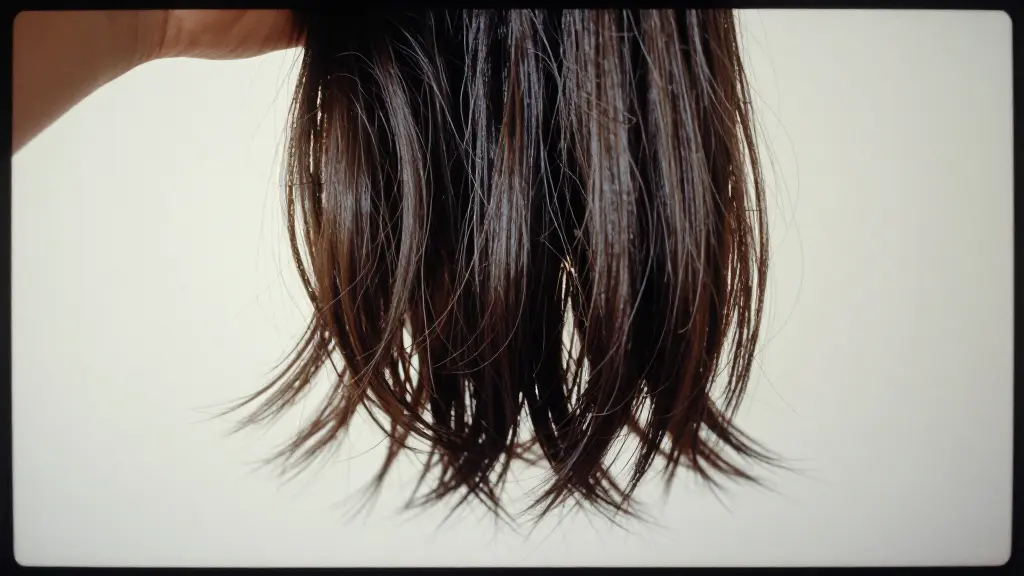
The top half still looks brand new. It is the bottom fifteen centimetres that give the whole thing away — dry, halo-y, rough to the touch, and stubbornly refusing to lie with the rest of the hair no matter how much you brush.
This is the most common way synthetic units age, and it happens for a reason that has nothing to do with how well you look after them. The good news is that fibre, unlike hair, can often be reshaped.
Why the Ends Go First
Synthetic strands start life smooth and uniform. What roughens them is friction, and friction is not evenly distributed.
The ends of a wig spend all day rubbing against your shoulders, coat collars, seatbelts, bag straps and the back of chairs. The mid-lengths get some of it. The crown gets almost none. Add the fact that the ends are the oldest part of the fibre in terms of accumulated contact, and the pattern makes sense.
Each rub lifts and scuffs the surface of the filament. Scuffed filaments catch on each other, splay outward instead of lying flat, and scatter light unevenly — which is what you are seeing as frizz.
Heat exposure accelerates it dramatically. A hot car, a radiator, opening an oven door, a hair dryer used absent-mindedly. Standard synthetic fibre softens at temperatures far lower than most people expect, and once a strand has kinked from heat, that kink is permanent.
Understanding this tells you what you are working with: you are re-laying scuffed fibre flat, not repairing it. That distinction sets realistic expectations.
Assess Before You Treat
Run a section through your fingers and look at what you have.
Surface frizz — the hair still feels reasonably soft, individual strands are just lifting away from the group. This responds very well to steam and often looks close to new afterward.
Rough, dry, catching fibre — strands feel textured rather than smooth and snag slightly on your fingers. Steam helps a great deal; expect improvement rather than perfection.
Crimped or kinked strands with a slightly shiny, hardened look — this is heat damage, and it is not reversible. The fibre has physically deformed. Steaming will not straighten it and heat will make it worse.
Fused clumps that will not separate — melted fibre. The only real option is trimming it out.
Be honest at this stage. Trying to steam heat-damaged fibre back to life is how people turn a wig that needed a trim into a wig that needs replacing.
The Steam Method
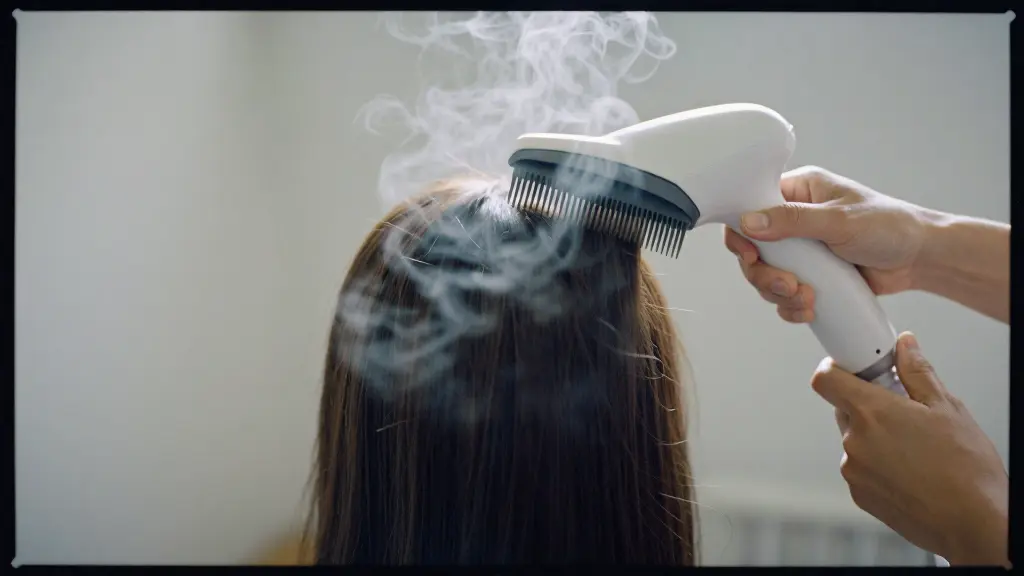
A garment steamer is the single best tool for synthetic fibre, because steam softens the filament just enough to be reshaped without the concentrated heat of an iron.
Fit the wig to a mannequin head and brush it out gently first, working from the ends up. If it is genuinely tangled, deal with that first — our softener soak method covers it.
Take a section a few centimetres wide and hold it taut with a wide-tooth comb near the top of the frizzy area.
Hold the steamer at a distance — around fifteen to twenty centimetres, never touching the hair. You want the cloud of steam, not the nozzle.
Comb downward through the section while steaming. The comb is doing the work of laying the fibre flat; the steam is making it pliable enough to accept the new shape. Move steadily, one pass at a time.
Let it cool before touching it. This is the step people skip and it matters enormously. Synthetic fibre sets as it cools, exactly like a curl setting. Touch it while it is warm and it will not hold.
Work around the whole wig, section by section, doing the worst areas first while your patience is fresh.
Repeat passes if needed, but give each section time to cool between them.
No steamer? Some people get reasonable results by hanging the wig in a steamy bathroom for twenty minutes and combing it through afterward. It is slower and less controlled, but it is gentle and it costs nothing.
Using a Flat Iron on Heat-Friendly Fibre Only
If — and only if — your unit is specifically labelled heat-friendly or heat-resistant, a low-temperature flat iron can smooth ends that steam alone did not fix.
Check the label first. Not “I think it probably is.” Standard synthetic fibre will melt, and melted fibre welds to the plates of your iron.
Test on a hidden strand. Take a small section from the underside near the nape, apply the iron at the lowest setting for a couple of seconds, and inspect it. If the strand comes out smooth, proceed. If it kinks, shines oddly, sticks, or smells at all, stop immediately.
Start at the lowest setting your iron offers and only increase if the low setting is doing nothing. Manufacturer guidance varies by fibre, so follow whatever came with your wig over any number you read online.
Work in thin sections and move the iron continuously. Never hold it in one spot.
Stay well away from the lace and the cap. Heat near the front will damage the mesh, and lace damage is a separate repair job — see our guide to fixing torn lace if it comes to that.
Let each section cool fully before brushing.
When Trimming Is the Right Answer
Sometimes the ends are simply finished, and there is no shame in that.
A few centimetres off the bottom often transforms a wig that looked tired into one that looks intentional. Point-cut into the ends — snipping upward at an angle rather than straight across — so the new perimeter looks soft rather than blunt.
If the damage is patchy, trimming just the affected sections and blending is usually better than taking length off the whole unit.
Preventing the Next Round
- Store on a stand or in a satin bag. Fibre pressed against itself in a drawer roughens quickly. There are practical options for suitcases in our travel storage guide.
- Mind the friction points. Wear longer styles pulled forward off your shoulders, or keep a shorter unit for days with a heavy coat or a backpack.
- A light leave-in spray through the ends before wear reduces static and surface friction.
- Keep heat away. Car dashboards, radiators, hair dryers, oven doors and hot styling tools are all hazards for standard fibre.
- Brush gently and regularly, from the ends up, with a looped-bristle wig brush.
If you find yourself steaming the same unit every few weeks, the fibre grade may be the real issue. Higher-quality heat-friendly fibre resists scuffing better and gives you the option of low-heat styling as a maintenance tool rather than a gamble — frizz-free synthetic brands are built for exactly this kind of everyday wear.
Frequently Asked Questions
Can I use a hair dryer on a synthetic wig?
Only on the cool setting, and only if you need to speed up drying. Warm or hot air on standard synthetic fibre causes frizz at best and permanent kinking at worst. Heat-friendly fibre tolerates low heat, but even then, cool air and patience are safer.
Will hair oil or serum fix frizzy synthetic ends?
It can temporarily weigh the strays down and make them look smoother, but it does not change the fibre, and heavy oils build up and dull the hair over time. A light silicone-free leave-in spray designed for wigs is the better everyday option. Steam is what actually reshapes the fibre.
How do I know if my wig is heat-friendly?
The packaging or product listing will say so explicitly, usually with a maximum temperature. If it does not say, assume it is not. The strand test on a hidden section at the nape is the practical way to check when the label is long gone.
Can frizzy synthetic hair ever look brand new again?
Surface frizz often comes back remarkably close to new after steaming. Fibre that has been rubbed genuinely rough will improve but keep a slightly textured look, and heat-kinked strands will not recover at all. Knowing which you have saves a lot of frustration.
Is it worth restoring an old wig or should I replace it?
If the frizz is confined to the ends and the cap, lace and overall density are still good, restoring or trimming is well worth an hour. If the fibre is rough from the mid-lengths down and re-frizzes within a wear or two, you have reached the end of that unit’s useful life.