
It looked like cool, expensive blonde when you bought it. Three months later it has drifted somewhere else entirely — a warm, yellowy tone that reads cheap in photographs and clashes with everything you own.
Brassiness on a blonde unit is not a sign you did something wrong. It is the predictable behaviour of bleached hair over time, and once you understand the colour theory behind it, fixing it takes about fifteen minutes.
Why Blonde Wigs Turn Yellow
Almost every pale blonde unit — the shade usually sold as 613 — started out as darker hair that was bleached. Bleaching removes pigment in stages, and it removes cool pigments before warm ones. Underneath the blonde you see, there is always warmth left behind: yellow on light blonde, orange on darker shades.
Manufacturers cover that warmth with a toner, which is a semi-permanent deposit of cool pigment. Toner is not permanent. It washes out, oxidizes and fades, and as it goes, the underlying yellow that was always there becomes visible again.
Several things speed that up:
- Washing, which gradually removes deposited toner
- Minerals in tap water, particularly in hard-water areas, which can leave deposits with a warm cast
- Sun exposure, which oxidizes the hair and shifts it warmer
- Heat styling, which does the same thing faster
- Product buildup and certain oils, which yellow over time
- Chlorine and salt water, which are hard on any processed colour
None of this is damage. It is fading, and fading is correctable.
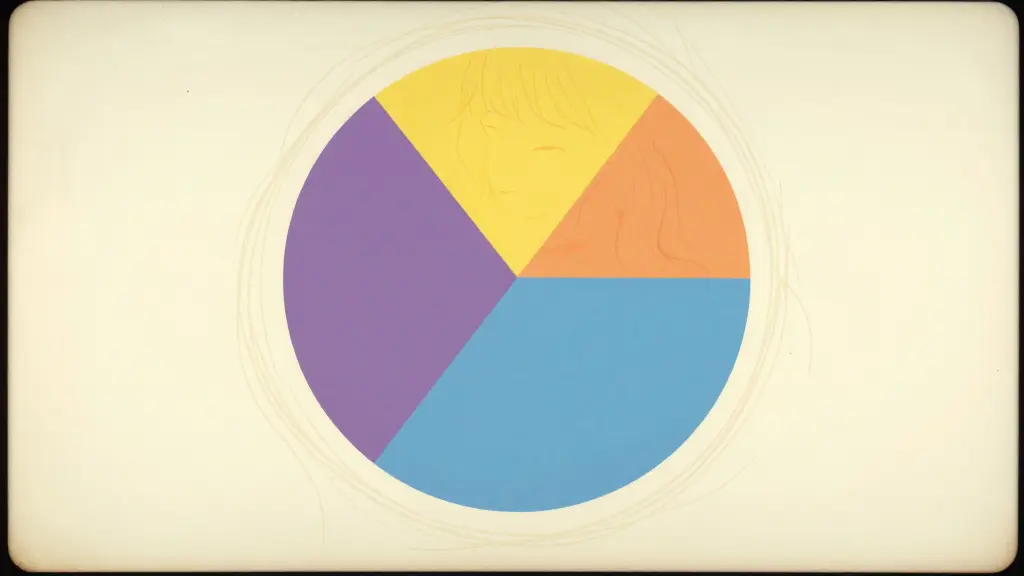
The Colour Theory in One Minute
Colours directly opposite each other on the colour wheel cancel each other out. That is the entire principle behind toning.
Purple sits opposite yellow. Use purple shampoo or a purple mask when your blonde has gone yellow or lemony.
Blue sits opposite orange. Use blue when the warmth is deeper — orange or copper — which is more common on darker blondes and on units that were not lifted as pale.
Look at your wig in natural daylight and decide honestly which you are seeing. Reaching for purple on genuinely orange hair is the most common mistake, and it produces a muddy, greyish result rather than a clean one. If yours is firmly in the orange range, reach for a blue-pigmented product instead.
Toning does not lighten anything. It deposits pigment to neutralize a tone that is already there. If your wig is too dark overall, toner is not the answer.
What You Will Need
- Purple or blue toning shampoo, or a colour-depositing mask for stronger correction
- Gloves — purple pigment stains hands and nails readily
- A mannequin head or wig stand
- A timer
- A deep conditioner or hair mask
- An old towel you do not mind staining
The Toning Process
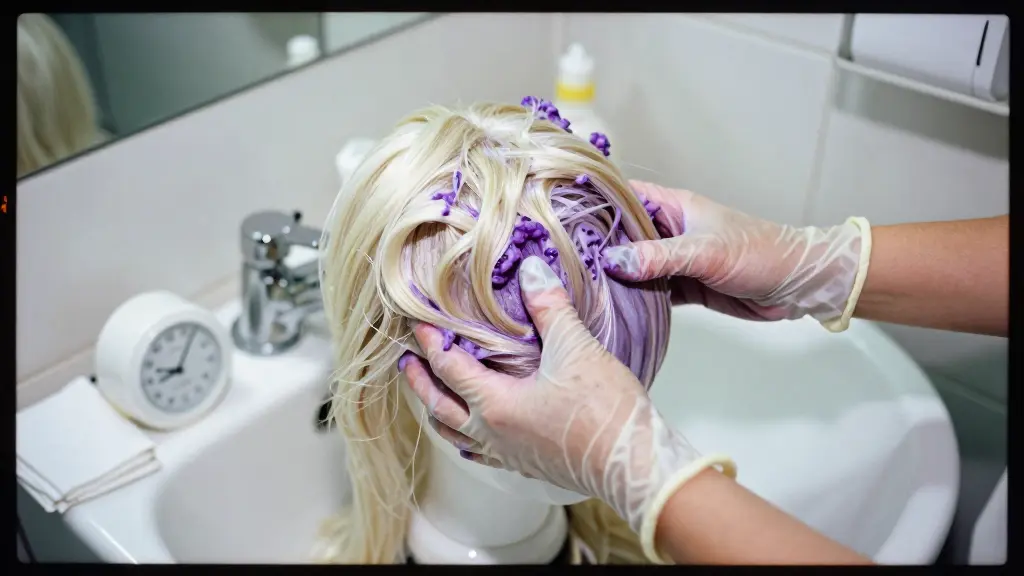
Start with clean, damp hair. Wash the wig first with a gentle sulphate-free shampoo. Toner deposits far more evenly on hair that is not carrying product residue. Squeeze out the excess water so it is damp, not dripping — soaking hair dilutes the pigment.
Apply from the ends up. The ends are usually the most porous and the most brassy, so they need the longest contact. Work the product through the lengths, then the mid-lengths, then the top.
Distribute it properly. Use your fingers or a wide-tooth comb to make sure every section is covered. Patchy application gives patchy results, and patchy toning is far more noticeable than uniform brassiness.
Time it — and start short. Three to five minutes is a sensible first attempt. Check by rinsing a small section and looking at it in good light. You can always repeat; you cannot easily remove excess purple.
Do not leave it on for an hour. Bleached hair is porous, and porous hair grabs pigment fast. Extended contact is how people end up with a lilac or grey cast on a unit they liked.
Rinse thoroughly with cool water until the water runs clear.
Check the result while the hair is still wet, but reserve judgement until it dries — wet hair reads darker and cooler than it will look finished.
Locking the Tone In
Toning is drying, and the hair on a blonde unit is already heavily processed with no scalp oils reaching it. This step is not optional.
Follow immediately with a deep conditioner or hair mask, concentrated on the mid-lengths and ends, left on for the full recommended time. A mask with bond-building or protein content is a good choice for bleached hair, though alternating protein and moisture treatments is wiser than using protein every time.
Rinse cool, blot with a microfibre towel rather than rubbing, and let it air dry on a stand where possible.
To make the result last:
- Tone on a schedule rather than in a panic — a short purple treatment every three or four washes keeps the drift from ever becoming obvious
- Use colour-safe, sulphate-free shampoo the rest of the time
- Keep heat styling moderate, and use a heat protectant when you do
- Store it out of direct sunlight
- Rinse after swimming, since chlorine is particularly hard on blonde. Our swimmer’s routine has the full protocol
If It Goes Too Purple
It happens, and it is usually fixable.
Wash the wig a few times with a clarifying shampoo, which lifts deposited pigment faster than a gentle formula. A conditioner-heavy wash also helps draw out excess. Most over-toning fades within two or three washes.
Follow with a deep conditioner each time, because clarifying is drying, and avoid the temptation to tone again until you can see the true underlying colour.
Prevention is easier: start with three minutes, check, repeat if needed.
When Toning Is Not Enough
Some situations need more than a shampoo. If the brassiness is uneven across the unit, if the hair has bands of different tones, or if the wig has drifted several shades warmer overall, a proper toner with developer applied by someone who knows what they are doing will give a far better result than repeated home attempts.
And there is a point at which a heavily faded, over-processed blonde unit is simply past its best — dry, straw-textured hair does not hold tone regardless of what you put on it.
If you wear blonde regularly, it is worth budgeting for the maintenance, since blonde units genuinely require more upkeep than any other shade. Keeping quality top-rated toning products in your routine from the start prevents the dramatic corrections entirely. And if you are toning a unit whose knots have been lightened, the same purple principle applies to the knots themselves.
Frequently Asked Questions
How long should I leave purple shampoo on a wig?
Start at three to five minutes and check. Wig hair is often more porous than growing hair and takes pigment faster, so the timings on the bottle are frequently longer than you need. Build up with a second short application rather than one long one.
Can I use purple shampoo on a synthetic wig?
It generally does very little. Toning works by depositing pigment into porous hair, and synthetic fibre is not porous in the same way, so the pigment mostly rinses away. Yellowing on a synthetic blonde unit is usually a fibre and buildup issue rather than something toner can fix.
Purple or blue — how do I choose?
Look at the warmth in daylight. Yellow and lemony tones need purple; orange and copper tones need blue. Getting this wrong is the most common reason a toning session produces a muddy result rather than a clean one.
Why does my wig go brassy so quickly?
Frequent washing, hard water minerals, sun exposure, heat styling and chlorine all strip toner faster. Wig hair also has no natural oils protecting it, which makes it more porous and quicker to fade than growing hair.
Will toning damage my wig?
Toning shampoos are gentle and mostly deposit rather than lift, so occasional use is fine. The risk is dryness rather than damage — always follow with a deep conditioner, and avoid toning more often than the hair actually needs.