
You are twenty minutes into a run, feeling good, and then you feel it — that small slide. You touch your hairline to check, which is exactly what you did not want to do in a room full of mirrors, and now you are thinking about your wig instead of your workout.
This is one of the most common reasons people quietly stop wearing units to the gym, and it is a shame, because it is fixable. Glueless wigs can absolutely handle a serious training session. It just takes a bit of preparation that nobody explains when you buy one.
Why Sweat Undoes a Grip That Felt Secure
A glueless unit stays put through friction and gentle tension: combs biting into your hair, an adjustable strap holding the circumference, and a band or cap gripping your scalp. Every one of those depends on surfaces that stay reasonably dry.
When you sweat, several things happen at once. Moisture forms a thin film that lets surfaces slide past each other — the same reason a wet floor is treacherous. Your natural oils, which the heat brings to the surface, add to the slipperiness. And the wig cap itself absorbs sweat and stretches slightly, so a strap that was snug at the start of your session is measurably looser by the end.
Then add movement. A brisk walk is one thing; burpees, running, or anything with your head tipping forward and back applies repeated small tugs in the same direction. Bit by bit, the unit walks backward.
Understanding this tells you exactly where to intervene: control the moisture at the contact points, and give the wig more than one thing holding it in place.
Prep Your Hairline and Scalp Before You Cap Up
This step does more than any product you can buy.
About fifteen minutes before you get dressed, wipe your hairline and the perimeter of your scalp with a cotton pad and a gentle astringent — witch hazel is the usual choice because it is inexpensive and not harsh. This removes the oil and residual product that would otherwise become a slip layer.
Then let everything dry completely. Genuinely completely. Capping over even slightly damp skin traps moisture from the start.
Skip oils, heavy leave-ins and rich creams along the perimeter on training days. Save those for the sections of hair that live under the cap, where they cannot interfere with grip. And if you use an edge control on your baby hairs, choose a light one and apply it sparingly — a thick, tacky gel plus sweat produces a slick, uncomfortable mess by the end of the session.
Underneath, braid or pin your hair flat and even. A lumpy base gives the wig high points to pivot on, which is exactly what you do not want when you are moving. If your hair is long and dense, our flat prep guide walks through the braiding patterns that work best.
Building a Grip That Survives a Real Session
Do not rely on one point of contact. Layer three.
Start with a silicone or velvet grip band. These are wide elastic bands, worn around the hairline under the wig, with a textured inner surface that holds onto skin far better than nylon does. Position it just behind your natural hairline so it sits under the lace rather than under the visible edge. Choose a wide band over a narrow one — wide spreads pressure and stays put, narrow digs in and rolls.
Then use the adjustable straps properly. Most people set them once and forget. Before a workout, take them in one notch tighter than your everyday setting to account for the stretch that heat and sweat will cause. Not painfully tight — you should still be able to slip a finger under the cap. If the straps are already at their limit and the wig still moves, the cap is too big for you, and a unit with a longer adjustment range is the real fix.
Then use the combs. The small clips sewn into the cap are genuinely useful when they are anchored into braided hair rather than loose strands. Push them in toward the scalp and angle them so they bite. A comb at the nape does the most work, because that is where backward slippage begins.
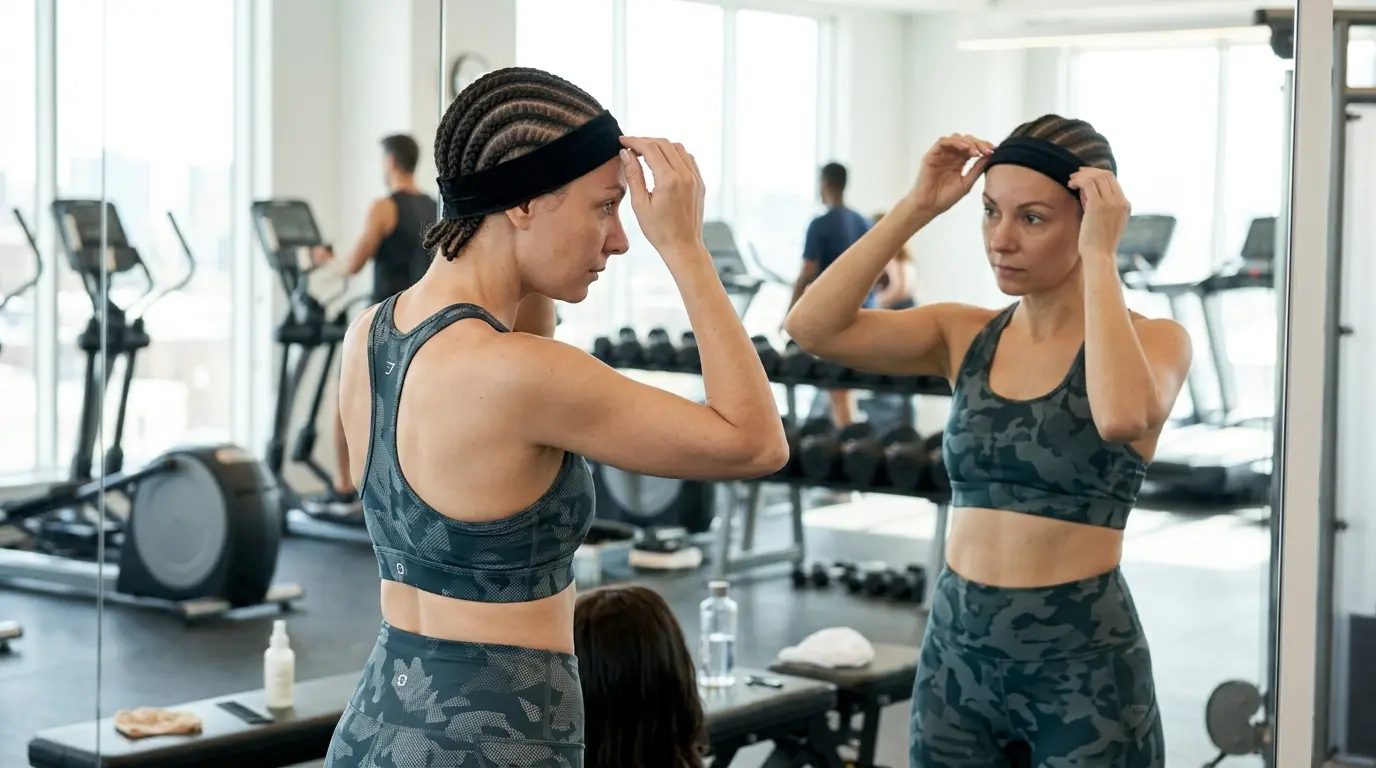
For anything really vigorous, add a fourth layer: a fabric headband or wrap over the top. It looks intentional in a gym, it holds the hairline down, and it soaks up sweat before it reaches the lace.
Choosing the Right Unit for Active Wear
Some units are simply better suited to this than others. A lighter density moves less and traps less heat. A shorter length or a style you can tie back keeps hair off your neck and reduces the swinging weight that tugs at the cap. A breathable cap construction makes the whole experience less sweaty from the outset.
If you train several times a week, it is worth investing in a dedicated gym unit rather than putting your best one through repeated sweat cycles. Look for secure glueless wigs for active wear with wide adjustable straps, well-placed combs and a lightweight cap — the difference in confidence is immediate.
Managing Your Workout Itself
A few small habits help enormously.
Keep a small towel or a few blotting papers with you and dab — do not wipe — at your hairline between sets. Wiping drags the lace; blotting lifts moisture without moving anything.
Be aware of which movements create the most force. Inversions, anything face-down, and high-impact running are the hardest on a unit. If you know a slip is likely, do a quick check before that part of your session rather than mid-movement.
And resist the urge to constantly touch and adjust. Every touch transfers oil to the lace and works the edge loose. If it feels secure, leave it alone.

What to Do the Moment You Get Home
The post-workout routine matters as much as the prep, and it is the part most often skipped.
Take the unit off as soon as you reasonably can. Sweat left sitting under a cap keeps your scalp warm and damp for hours, and that combination encourages irritation, odour and flaking. Hang or lay the wig somewhere it can air out before it goes near a storage bag — putting a damp unit into a sealed bag is how wigs develop a smell you cannot get rid of.
Rinse or cleanse your scalp. You do not need a full shampoo every single time, but you do need to get the salt and sweat off. On heavy training days, or once or twice a week, use a proper clarifying wash to clear the buildup of sweat, product and oil that accumulates around a wearing routine. Follow with a light, non-greasy moisturizer so your scalp does not overcorrect into dryness.
Give your grip band a wash too. It sits against your skin and collects everything your hairline produces, and a stiff, salt-crusted band grips considerably worse than a clean one.
If you are noticing persistent itch or tenderness after workouts, that is worth addressing directly rather than pushing through — our guide to calming irritation under a lace unit covers the causes and the fixes.
Frequently Asked Questions
Can I swim in a glueless lace front wig?
You can, but expect it to move, and expect the hair to take a beating from chlorine or salt. Full submersion loosens almost any glueless hold. If you swim regularly, a swim cap over a secured unit, or a dedicated swim-specific style, is far more practical than trying to make an everyday wig waterproof.
Will a grip band damage my edges?
A wide, properly positioned band worn at reasonable tension is generally fine. Problems come from narrow bands, bands worn too tight, or bands sitting directly on the delicate hairs at the very front. If you see redness, indentation lines lasting more than a few minutes, or thinning along that line, loosen it and move it back.
How do I stop the lace lifting when I sweat?
Sweat under the lace edge is the main cause. Cleanse the skin thoroughly beforehand, use a grip band positioned behind the lace, blot rather than wipe during your workout, and consider a headband over the top for high-intensity sessions. Some people also find a light, sweat-resistant mousse along the perimeter helps hold the edge down.
How often should I wash a wig I wear to the gym?
More often than a going-out unit — roughly every five to seven wears, or sooner if you notice odour or stiffness. Sweat leaves salt in the fibre, which dulls it and speeds up wear at the cap.
Is it better to just wear a scarf or a hat instead?
For genuinely extreme sessions, plenty of people do exactly that, and there is nothing wrong with it. But most training does not require giving up your unit. Layered grip, dry prep, and a lighter wig handle the vast majority of workouts perfectly well.