
The whole promise of a protective style is that your hair gets a break — no daily manipulation, no heat, no weather, just months of quiet growth underneath.
That promise is real. But it comes with a condition that gets left out of the conversation: your hair is not on pause under there. It is still living, still shedding, still needing moisture, and it is doing all of that in a warm, dark, enclosed environment that has its own risks. Plenty of people take a style down after eight weeks and find less hair than they started with.
Here is how to make sure the protection is actually protective.
What Goes Wrong Under There
Trapped moisture and heat. Your scalp produces sweat and oil all day. Under a cap or a sewn-in weave, that has nowhere to evaporate. Persistently damp, warm skin is the environment in which yeasts and bacteria that live naturally on everyone’s scalp become overactive — which shows up as itching, flaking, odour and sometimes worse.
Buildup. Product, sweat, dead skin and dust accumulate on a scalp that is not being properly cleansed. Buildup irritates skin and can contribute to inflammation.
Dryness. The opposite problem, and just as common. Hair braided down and covered for weeks gets no moisture unless you deliberately provide it, and dry hair breaks.
Tension. Braids installed too tightly, wig combs digging into the same spot, thread pulled hard during a sew-in — all of it puts strain on follicles, and sustained strain is what turns a protective style into a damaging one.
Matting and neglect. Hair left untouched for months tangles at the root, and shed hair that would normally fall out stays trapped in the braid. Takedown then becomes a battle, and battles cause breakage.
Notice that most of these are about what you do during the style, not the style itself.
Before You Install Anything
Prep determines how the next several weeks go.
Clarify. Start with a properly clean scalp. A clarifying shampoo removes the buildup you have accumulated, because whatever is on your scalp at install is going to be sealed under there.
Deep condition thoroughly. This is the last full treatment your hair will get for a while. Use heat — a steam cap, or a plastic cap under a warm towel — to help it absorb.
Detangle completely and gently. In sections, from the ends up, with slip. Any tangle you braid in will be a bigger tangle at takedown.
Trim if you need to. Damaged ends left under a style for two months will be worse when you take it down, not better.
Moisturize and seal. A water-based leave-in, then a light cream, then a small amount of oil. If your hair is low porosity, apply to warm damp hair so it actually absorbs — our low porosity guide explains why that matters.
Dry completely before covering. Genuinely completely. Installing over damp hair traps moisture for days and is one of the most reliable ways to end up with an itchy, smelly scalp.
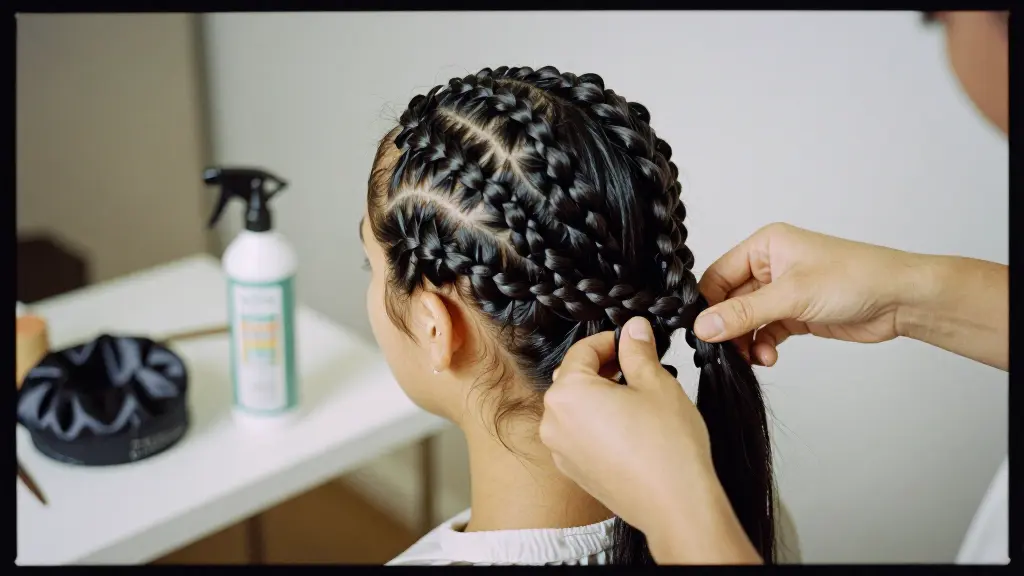
Braid loosely. Snug, not tight. You should be able to slide a finger under the braid at the root, and it should not hurt. If your stylist is pulling hard, say so.
Looking After Your Scalp During Wear
This is the part most people skip, and it is where the damage happens.
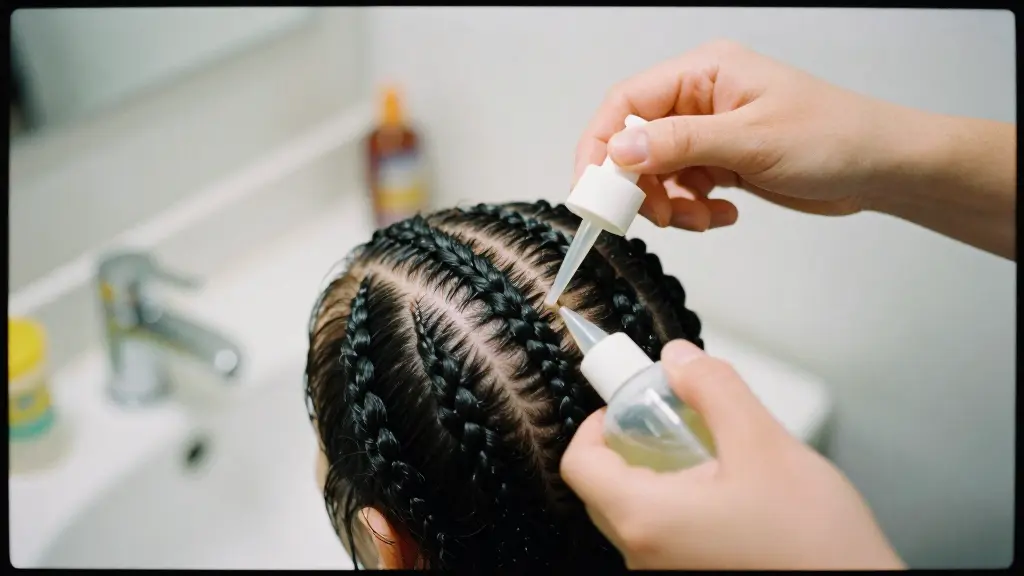
Cleanse regularly, even under a style. Every one to two weeks. An applicator bottle with diluted shampoo lets you get directly to the scalp between braids. Witch hazel on a cotton pad along the parts is a good lighter option between washes.
Rinse thoroughly and dry completely. More important under a style than at any other time. Use a hair dryer on cool at the roots if you need to — leaving a sewn-in weave damp is asking for trouble.
Moisturize the hair, not just the scalp. A light water-based spray applied through the braids a couple of times a week keeps your actual hair from drying out. Do not soak it.
Use light oils sparingly on the scalp. A few drops of a light oil massaged in relieves dryness and itching. Heavy oils and thick butters clog and contribute to buildup, which is the opposite of helpful. Scalp oils for protective styles formulated to be light and non-clogging are the right category here.
Do not scratch. Tapping firmly relieves the itch without breaking the skin. If itching is persistent, that is information — our guide to soothing an irritated scalp covers the likely causes.
Sleep protected. A satin bonnet or scarf reduces friction and keeps the style neater.
Wig Wearers Have an Advantage — If They Use It
If you are wearing a wig rather than a sewn-in style, you have something the sew-in crowd does not: you can take it off.
Use that. Remove the unit daily, or at minimum every few days. Let your scalp breathe for an hour. Air is the single most effective thing against the warm-and-damp problem.
Rotate between two units so each one can air out fully. A cap that goes back on damp every morning is doing your scalp no favours.
Clean the inside of your caps. They collect sweat and skin cells and put it all back against you.
Give yourself full rest days where you wear nothing at all, and use them to wash, deep condition and moisturize properly.
Keep the security gentle. Loose straps, a wide grip band, and combs that are not digging in — see our comfort fit guide.
Knowing When to Take It Down
Six to eight weeks is the usual ceiling for a sew-in or braided install. Past that, new growth adds tension at the root and matting becomes serious.
Take it down early if you have persistent itching, an odour, tenderness or pain, visible flaking or scabbing, or if the style has loosened enough to be pulling unevenly.
Do not extend a style because it still looks good. What it looks like on the outside tells you nothing about what is happening underneath.
Taking It Down Without Losing Hair
Takedown causes a surprising amount of breakage, mostly through impatience.
Set aside proper time. Rushing is the problem.
Saturate with conditioner or oil before you start unravelling. Slip makes everything easier.
Work in sections, unravelling rather than pulling.
Expect a lot of shed hair. Everyone sheds daily; under a style, weeks of shed hair stays trapped in the braid and all comes out at once. A large amount at takedown is usually normal accumulation rather than loss — though hair that is snapped at mid-length rather than shed with a small white bulb at the root is breakage, and worth paying attention to.
Detangle before washing. Working through tangles with conditioner and a wide-tooth comb, in small sections, from the ends up.
Then give your hair a proper reset: clarify, deep condition, moisturize.
And take a break before the next install. At least a week, ideally two. Back-to-back protective styles with no recovery time is one of the most common reasons people find their hair worse rather than better after a year of “protecting” it.
Frequently Asked Questions
How often should I wash my hair with a sew-in or braids?
Every one to two weeks. Use an applicator bottle with diluted shampoo to reach the scalp directly, rinse well, and make sure everything dries completely afterward.
Can I wear a wig every day without damaging my hair?
Yes, provided you take it off regularly, keep the hold gentle rather than tight, moisturize the hair underneath, and give your scalp air. Daily wear with no breaks and tight security is where problems start.
How long can I leave a protective style in?
Six to eight weeks is the general maximum for braided or sewn-in styles. Longer means new growth creating tension at the roots and significant matting at takedown, which costs you more hair than the style saved.
Why does my scalp smell under my install?
Almost always trapped moisture combined with buildup — often from installing over hair that was not fully dry, or from not cleansing during wear. Wash the scalp properly, dry it completely, and if the odour persists, take the style down.
Is a wig or a sew-in better for protecting my hair?
A wig generally puts less strain on your hair, mainly because you can remove it. That daily airing and the ability to moisturize easily are real advantages. A sew-in offers convenience and a more permanent install, but it demands a more disciplined scalp routine to stay safe.